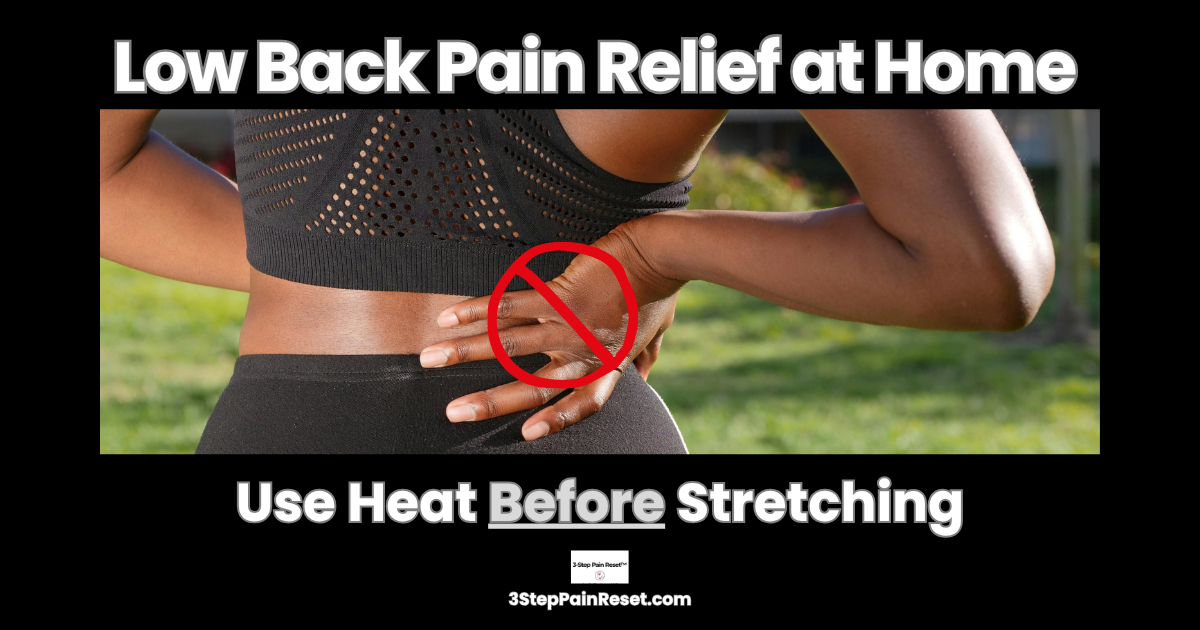
Tight muscles often stay tight because the body is guarding — bracing the area in a protective state that passive stretching can’t break through. Moist heat is one of the most effective ways to reduce that guarding before it’s disturbed by movement or pressure. But where most people go wrong is using heat alone, or using it at the wrong point in the sequence.
Here’s why moist heat works, when to use it, and exactly where it fits in the process that actually creates lasting relief.
Why Moist Heat Works Better Than Dry Heat
Most people have used a heating pad and felt temporary relief. Moist heat goes further because it penetrates the tissue differently:
The 3-Step Pain Reset™
Stop treating symptoms. Reset the pattern that keeps creating them.
The same neuromuscular method used in clinical settings — simplified for home use. Release → Moist Heat → Stretch. Done in order. Takes 15–20 minutes.
Deeper Tissue Penetration
Moisture conducts heat more efficiently than dry air. A moist heat wrap at the same temperature as a dry pad will penetrate deeper into the muscle tissue — reaching the guarded fibers that are holding the tension pattern.
Increased Blood Flow
Heat dilates blood vessels in the treated area, increasing circulation. This flushes out metabolic waste products that accumulate in tight muscles and delivers oxygen and nutrients that support recovery.
Nervous System Signal
Warmth triggers a parasympathetic response — the body’s rest and recovery state. This directly counters the sympathetic guarding response that keeps muscles locked. According to the Cleveland Clinic, heat therapy can effectively relax muscles and relieve stiffness.
Improved Tissue Receptivity
Warm tissue stretches more effectively than cold tissue. Applying moist heat before stretching means the muscle is already softened and more willing to lengthen — rather than resisting every millimeter of movement.
Dry Heat vs. Moist Heat — The Difference
| Factor | Dry Heat | Moist Heat |
|---|---|---|
| Penetration depth | Surface level | Deeper muscle tissue |
| Tissue moisture | Can dehydrate skin | Maintains hydration |
| Nervous system effect | Moderate relaxation | Stronger parasympathetic signal |
| Before stretching | Helps somewhat | Significantly more effective |
| Cost | Low | Low — warm towel is free |
When to Use It — Sequence Matters
This is the part most people get wrong. Moist heat is powerful — but it works best as Step 2, not Step 1. Here’s why the order changes everything:
The Correct Sequence
Step 1 (Release) interrupts the tension pattern using gentle tool pressure. Step 2 (Moist Heat) then deepens and reinforces that release while the muscle is already more receptive. Step 3 (Stretch) introduces length only after the tissue is warm and relaxed. Each step sets up the next one.
Simple Moist Heat Options at Home
Microwaveable Moist Heat Wrap
Designed specifically for this purpose — holds warmth for 15–20 minutes and delivers consistent moist heat. Available for neck, shoulder, and low back areas. See the Tools page for what we recommend.
Warm Damp Towel
Wet a hand towel, wring it out well, and microwave for 60–90 seconds. Wrap in a dry towel to hold warmth longer. Test temperature on your forearm before applying — it should feel comfortably warm, not hot. Doesn’t last as long as a purpose-built wrap but works well.
We may earn small affiliate commissions from qualifying purchases. This content is for educational purposes only and is not medical advice.
See all recommended tools for the full sequence
Moist heat wraps, massage balls, and positioning tools.Related Posts
Get the Free Pain Reset Guide
The full sequence breakdown including how and when to use moist heat — with pain area guides and a 7-day plan. Free instant download.
Get the Free Guide →Relief often starts by reducing resistance, not increasing force. Moist heat in the right position in the sequence is one of the simplest and most effective ways to create that reduction — at home, with tools you already have or can easily get.
Want the Full 10-Page System?
Complete guide with full sequence, pain area breakdowns, 7-day plan, daily routine card, and bonus app. $9.97 — instant download.